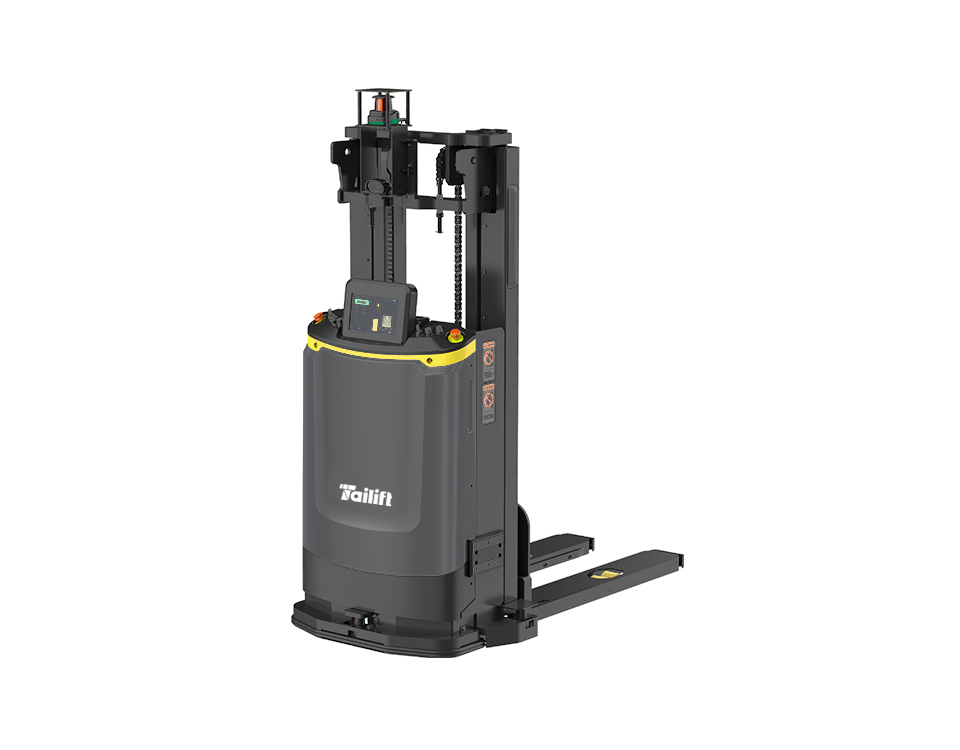
FMR can automatically lift, load, unload, and transfer goods from storage racks. It is capable of long-distance transportation, delivering goods to various conveyor lines and processing machines, as well as retrieving goods from conveyors and processing machines. With its safety features, FMR creates a secure working environment by eliminating the risk of accidental collisions and product damage caused by operator errors. For the handling of sensitive items or hazardous materials, the FMR system provides a safe and cost-effective alternative. FMR is especially suitable for applications in harsh environments, such as cold storage warehouses.
The Forklift-type Robot (FMR) is a safe and efficient solution that requires no human intervention throughout the process. It offers flexible deployment, high efficiency, low retrofit costs, and strong equipment scalability.
With a rapid deployment time of 1-2 months, it can be adjusted based on customer needs to improve worker efficiency by 3-4 times. The system enhances intelligent picking and handling, increasing storage density by 80%-400%. It covers 0.2m to 10m of three-dimensional storage space, transitioning from traditional “rack-to-person” systems to the efficient “box-to-person” system. No need to climb high for picking, making operations more efficient and safer.
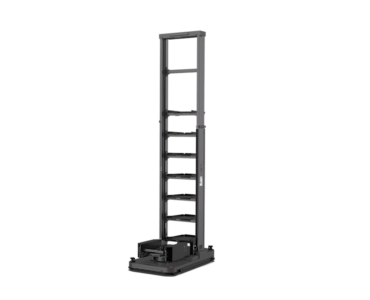
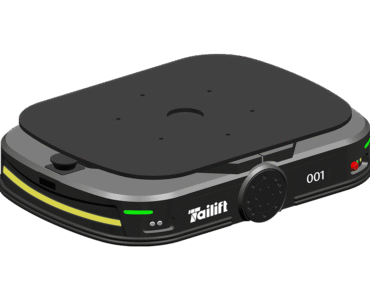
LMR is characterized by a lifting mechanism that provides customers with a flexible mobile transfer platform. It is equipped with a lifting device to automatically raise and lower storage racks. The robot can also creep underneath the storage rack, lift the rack’s bottom structure, and control the movement of the rack. Additionally, it can be paired with lightweight robotic arms for complex operations or with conveyors for automatic transportation. The LMR is highly flexible in its movements, capable of turning freely in place, making it ideal for logistics systems or industrial scenarios with high space and path requirements.
Features
Rapid implementation and startup
Significantly reduces operational costs compared to manual alternatives
Improves production and handling efficiency
Reduces labor requirements
Significantly minimizes product damage
Enhances occupational safety
Increases product traceability
Optimizes space utilization
Improves scheduling and shipping accuracy, autonomous navigation, and autonomous charging with high positioning precision
Stable straight-line movement speed with high stop accuracy